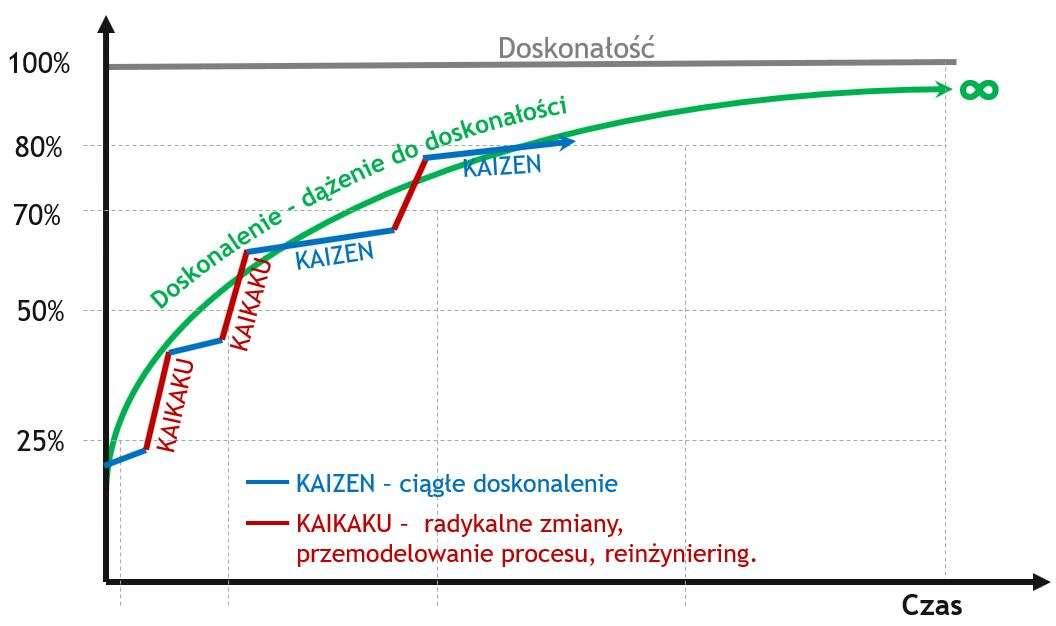
In a world where buzzwords like “disruption” and “breakthrough innovation” dominate the headlines, a quieter, steadier philosophy has been transforming some of the world’s most successful companies. It is called kaizen, a Japanese term meaning “change for the better” or simply “continuous improvement.”
Rooted in post-war Japan and made famous worldwide by manufacturing giants like Toyota, Kaizen isn’t about dramatic overhauls. Instead, it’s about making small, smart improvements—every day, by everyone.
What does Kaizen mean?
At its core, kaizen is a management philosophy that fosters a culture of continuous, incremental improvement. It empowers everyone—from executives to shop floor workers—to regularly examine their work processes and look for ways to make them more efficient, effective, and aligned with business goals.
Rather than waiting for a quarterly strategy or a new CEO to shake things up, Kaizen encourages everyone to take initiative and responsibility—every day.
Key principles of Kaizen
Continuous improvement
The heart of Kaizen is continuous improvement. It’s not about a single giant leap; it’s about countless small steps. Over time, these consistent improvements lead to transformational results.
Employee involvement
The people closest to the processes often have the best insights. Kaizen recognises this and ensures that everyone is actively involved in identifying problems and proposing solutions.
Elimination of waste (Muda)
Kaizen targets waste in all forms, from inefficient movement and overproduction to defects and idle time. The aim is to streamline processes and maximise value.
Incremental change
Small changes are easier to implement, test, and adapt. They’re also less risky, making them ideal for creating sustainable progress.
Standardisation
Once an improvement has been proven effective, it becomes the new standard. This creates a stable foundation on which further improvements can be built.
________________________________________
Kaizen methodology: The PDCA Cycle
One of the most popular tools within the Kaizen framework is the PDCA cycle, also known as the Deming cycle:
- Plan: Identify a process in which there is a need for improvement and develop a hypothesis or strategy.
- Do: Implement the improvement on a small scale.
- Check: Measure the outcome and analyse the results.
- Act: If the change is successful, standardise; if not, refine and try again.
This cyclical approach ensures continuous learning and improvement.
________________________________________
Real-world example: Kaizen in manufacturing
Imagine a factory where assembly tools are scattered across a large table, causing workers to waste seconds looking for the right item. One team suggests colour-coded trays and wall-mounted holders. Another suggests digital checklists to reduce errors. Weekly team huddles become a forum for these suggestions.
Fast-forward a year, and the company has
– Reduced production time by 15%.
– Reduced material waste by 20%.
– Improved team morale and empowerment
None of these changes were radical, but collectively they have resulted in significant cost savings and cultural change.
________________________________________
Where is Kaizen used?
While kaizen began in the world of manufacturing, it’s now used by organisations in many different sectors:
– Manufacturing: Lean Manufacturing, Six Sigma, and Total Quality Management owe much to Kaizen.
– Healthcare: Hospitals use Kaizen to reduce waiting times, improve patient safety, and streamline operations.
– Retail & Hospitality: Small service improvements lead to better customer experiences and increased loyalty.
– Technology: Agile and DevOps practices reflect Kaizen principles, emphasising iteration, collaboration, and constant feedback.
________________________________________
The benefits of Kaizen
✅ Increased productivity: streamlined workflows and empowered teams to work more efficiently.
✅ Cost reduction: Eliminating waste has a real impact on the bottom line.
✅ Improved quality: Continuous testing and refinement improves the final product or service.
✅ Employee engagement: Employees feel valued and involved, boosting morale.
Organisational agility: Organisations can adapt to change more quickly and effectively.
________________________________________
Kaizen is a culture, not a one-off fix.
Implementing Kaizen is not about ticking off a checklist or running a one-off workshop. It’s about fostering a mindset culture that sees every mistake as a learning opportunity and every process as something that can be improved.
Leaders must set an example, teams must feel safe to experiment, and the organisation must commit to long-term consistency.
________________________________________
Final Thoughts: Small changes, big impact
In a competitive global economy, it’s easy to be drawn to bold change and sweeping reform. The Kaizen approach reminds us that lasting success often comes not from giant leaps but from countless small steps taken with intention and care.
It’s not flashy. There’s nothing dramatic about it. But kaizen works—and for companies willing to commit, it can lead to powerful, lasting change.
Are you ready to embrace the Kaizen mindset in your organisation?
Start small. Start today. And never stop improving.