
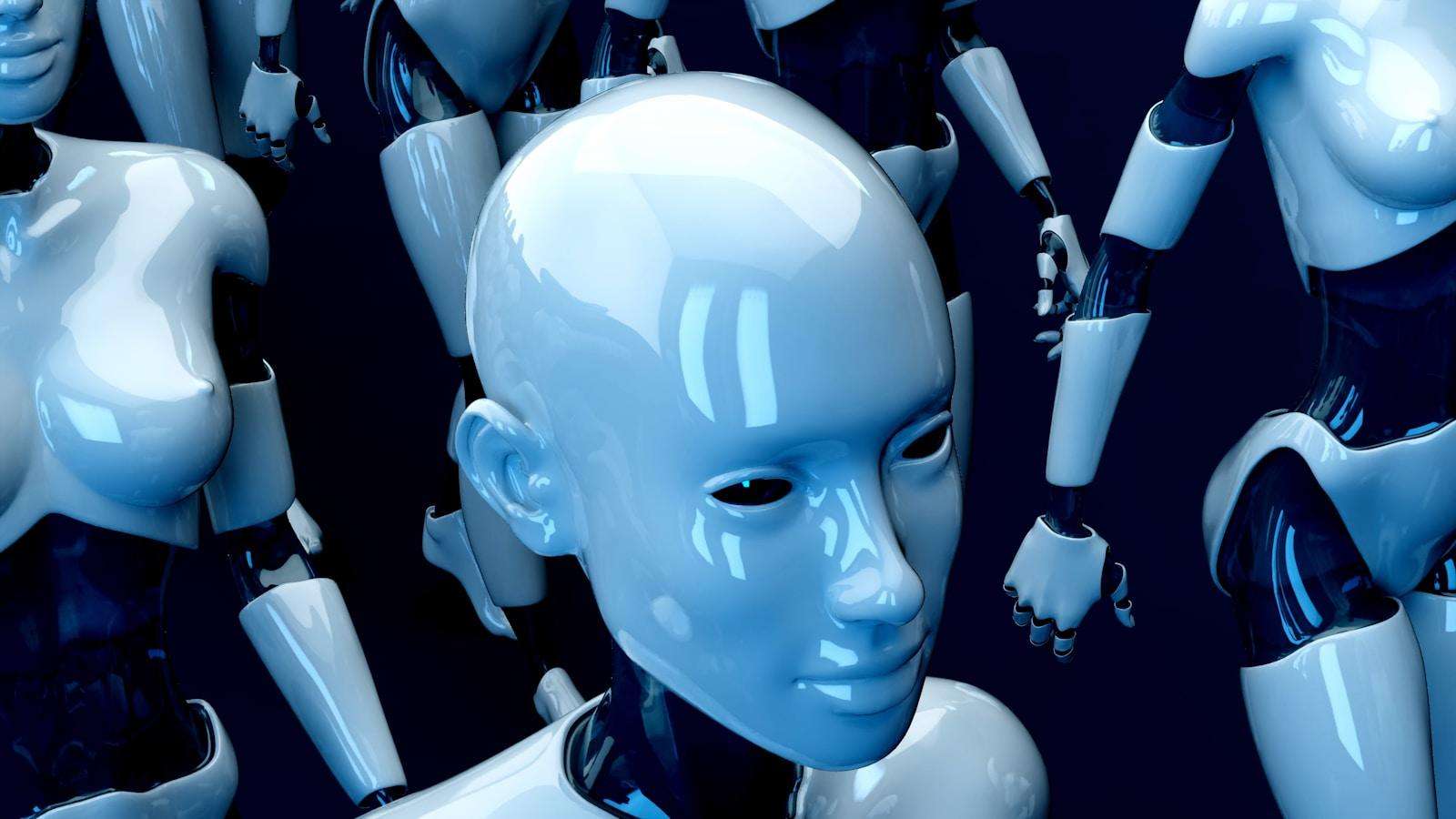
Artificial Intelligence (AI) is transforming every aspect of modern life—from automating repetitive tasks to revolutionizing medicine, finance, education, and even the creative arts. The hype surrounding AI systems, such as ChatGPT, autonomous vehicles, and predictive analytics platforms, has raised questions about whether machines will soon completely replace human decision-makers.
But amid the excitement, it is crucial to pause and reflect: Can AI truly replace human decision-making? And, more importantly, should it?
While AI excels in speed, scalability, and data processing, it fundamentally lacks qualities intrinsic to human decision-making, such as empathy, ethics, intuition, creativity, and contextual awareness. In this article, we will explore why human decision-making remains irreplaceable in the age of AI and how combining human insight with machine intelligence is the path forward.
The Power and Promise of AI
AI is more than just automation—it’s the replication of cognitive functions such as learning, problem-solving, and pattern recognition. Machine learning, deep learning, and neural networks have enabled systems to:
- Predict customer behavior with stunning accuracy
- Diagnose diseases from medical images
- Optimize supply chains in real time
- Generate marketing content and even music
These capabilities are no longer futuristic fantasies; they’re already part of our everyday reality. Businesses leverage AI for operational efficiency, governments use it for policy simulations, and individuals interact with it via digital assistants and recommendation algorithms.
However, this rapid evolution raises an unsettling question: Are we on a trajectory where AI systems make all major decisions?
To answer that, we must dissect what decision-making truly entails—and why the human element remains critical.
Decision-Making Is More Than Data
AI thrives on data. Its decisions are grounded in algorithms that analyze vast datasets to find correlations and patterns. But decision-making is not the same as data analysis.
Human decision-making is often:
- Contextual – influenced by circumstances that may not be quantifiable
- Moral – guided by principles, ethics, and values
- Intuitive – based on gut feelings shaped by lived experience
- Creative – imagining outcomes beyond the data set
- Emotional – considering human wellbeing, not just efficiency
Consider a doctor making a terminal diagnosis. An AI might deliver the information with medical precision. But it is the human physician who will choose their words with compassion, read the patient’s facial expressions, and offer support that considers emotional weight—not just statistical prognosis.
This kind of holistic decision-making is not something AI can replicate.
The Limits of AI in Complex Human Environments
Ethics and Morality
AI lacks a moral compass. Its “decisions” are the result of mathematical functions, not ethical reasoning.
Let’s take autonomous vehicles as an example. In an unavoidable crash, how should the car decide between two harmful outcomes? Sacrifice the driver or pedestrians? Protect the young over the old? These are ethical decisions society hasn’t fully answered, let alone encoded into algorithms.
Only humans can grapple with such moral dilemmas—because morality isn’t data-driven; it’s culturally and emotionally embedded.
Ambiguity and Grey Areas
Humans often make decisions without complete information. We fill in gaps using judgment, inference, or past experience. AI, however, performs poorly with ambiguity. It needs structured inputs, clear objectives, and measurable outcomes.
Consider legal systems. While AI can aid in legal research or risk assessments, it cannot replace the nuanced interpretation of laws, precedents, and intent that human judges apply in courtrooms.
Creativity and Innovation
AI is excellent at optimising existing systems—but innovation often comes from challenging the system itself.
Think of how the iPhone disrupted the phone industry, or how Airbnb reinvented accommodation. These decisions weren’t made by extrapolating existing trends—they were made by people who saw beyond what the data suggested.
AI can assist in idea generation, but it doesn’t “think outside the box” unless trained to mimic such behaviour—still under human guidance.
The Human Traits AI Cannot Replace
Empathy
Empathy is not just a feel-good trait. In leadership, negotiation, counselling, and customer service, empathy builds trust, fosters loyalty, and resolves conflict.
An AI may simulate empathy with polite responses, but it doesn’t actually feel concern or compassion. That disconnect can lead to tone-deaf outcomes if AI is left to lead without human oversight.
Intuition
Human intuition is the culmination of years of tacit knowledge—patterns, observations, and subtle cues that escape codification. A seasoned entrepreneur may spot a market opportunity that no model predicts. A surgeon may sense something’s wrong before tests confirm it.
AI lacks this embodied experience. It is bound by its data and programming.
Responsibility
Crucially, AI cannot be held accountable. If a human makes a bad decision, they can face consequences, learn, and adapt. When an AI errs, blame often shifts to developers, data scientists, or even the organisations that implemented it.
True decision-making requires responsibility. Without accountability, trust erodes.
When AI Goes Wrong: Real-World Cases
The COMPAS Controversy
In the US justice system, an AI tool called COMPAS was used to predict a defendant’s likelihood of reoffending. Investigative journalists found racial bias in its outputs—Black defendants were unfairly flagged as high-risk more often than white defendants.
The algorithm was not inherently racist, but the historical data it was trained on reflected systemic biases. Without human oversight, such AI systems can perpetuate injustice under the illusion of objectivity.
Amazon’s AI Hiring Tool
Amazon once developed an AI tool to screen résumés. The algorithm began downgrading applications from women—because it had been trained on ten years of résumés, which were male-dominated. The tool internalised existing gender bias.
Amazon scrapped the system, reinforcing the lesson: AI reflects the data it learns from. And human oversight is essential to interpret, challenge, and correct that reflection.
Augmentation, Not Replacement: A Human-Centric Approach
The most successful AI applications augment human capabilities rather than replace them. Consider:
- Radiology: AI assists doctors by flagging anomalies in scans, but the final diagnosis and communication rest with the physician.
- Finance: AI identifies fraud or predicts market trends, but humans assess risk and align decisions with strategic goals.
- Education: AI tailors learning paths, but teachers guide emotional development, critical thinking, and moral reasoning.
This symbiosis—human + machine—is where the real power lies.
The World Economic Forum echoes this, calling for “human-in-the-loop” AI systems that ensure ethical and effective outcomes.
The Role of Human Judgment in the Future of Work
As automation expands, jobs will evolve rather than vanish. Roles requiring complex decision-making, people skills, creativity, and adaptability will grow in value.
According to McKinsey, while up to 30% of tasks in 60% of jobs may be automated, the core roles will remain human-centric—especially in areas like:
- Strategy
- Design
- Emotional intelligence
- Ethical governance
- Crisis response
Organisations must therefore invest not just in AI infrastructure, but in human leadership development, ethics training, and creative problem-solving skills.
Navigating AI’s Rise with Human Wisdom
So how do we ensure AI serves us, rather than subverts us?
Ethical AI Frameworks
Developing and enforcing ethical standards for AI is crucial. This includes fairness, transparency, accountability, and inclusivity. Governments, companies, and academia must collaborate to set these guardrails.
Diversity in AI Development
Who builds the AI matters. Teams lacking diversity may inadvertently build biased systems. Including a range of perspectives—cultural, gender, socioeconomic—is essential for ethical outcomes.
Human Oversight
AI should never make critical decisions autonomously—especially in healthcare, justice, or governance. Human review must be built into the loop, not as an afterthought, but as a central feature.
Teaching Critical Thinking
Education systems must evolve to prepare future leaders who can work alongside AI—questioning outputs, interpreting data critically, and bringing moral clarity to technical decisions.
AI and the Philosophy of Choice
At its core, decision-making isn’t just functional—it’s philosophical. It involves questions like:
- What matters most?
- What are we willing to sacrifice?
- What kind of society do we want to build?
AI can’t answer these. It has no aspirations, no conscience, no legacy. But humans do.
To abdicate decision-making entirely to machines is not just impractical—it’s a surrender of agency. And that, arguably, is the greatest risk of all.
Conclusion: Choosing to Stay Human
In a world increasingly run by algorithms, the value of human decision-making becomes more—not less—important.
AI is an extraordinary tool. But it is still just that—a tool. It is not a moral agent, a visionary, a caregiver, or a creator. It cannot replace the rich tapestry of human thought, emotion, and purpose.
The future belongs not to AI alone, nor to humans alone—but to those who thoughtfully and ethically merge both. In that future, human decision-making is not obsolete. It is the compass that guides the machine.
Let us not forget: while AI may teach us how to optimise the path, only humans can choose why we walk it in the first place.